> For the complete documentation index, see [llms.txt](https://docs.sign.global/llms.txt). Markdown versions of documentation pages are available by appending `.md` to page URLs; this page is available as [Markdown](https://docs.sign.global/reference/index/schema.md).
# Schema
## Overview
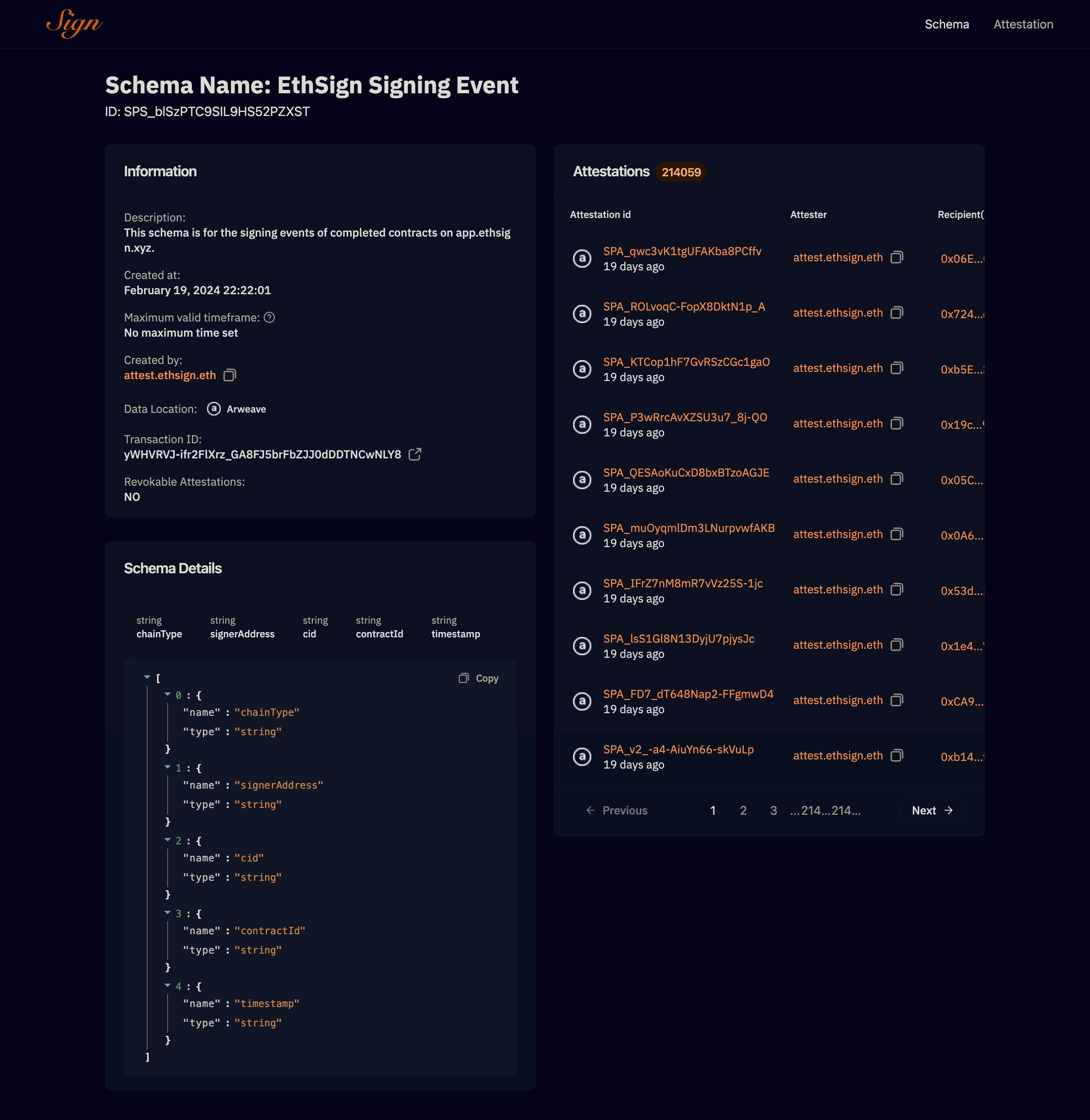
An EthSign schema on Sign Protocol
A schema defines the type and structure of data used in attestations, creating standards for accuracy and composability. It ensures attestations are insightful and verifiable. A Schema Registry stores and references schemas, coordinating standards and processes for efficient schema use.
## Purpose
Schemas establish rules for data organization in attestations, ensuring they are insightful and valid. They define structure and selection criteria for data points, providing context and provability. Schemas shape attestation standards, enhancing trust system efficiency.
## Design
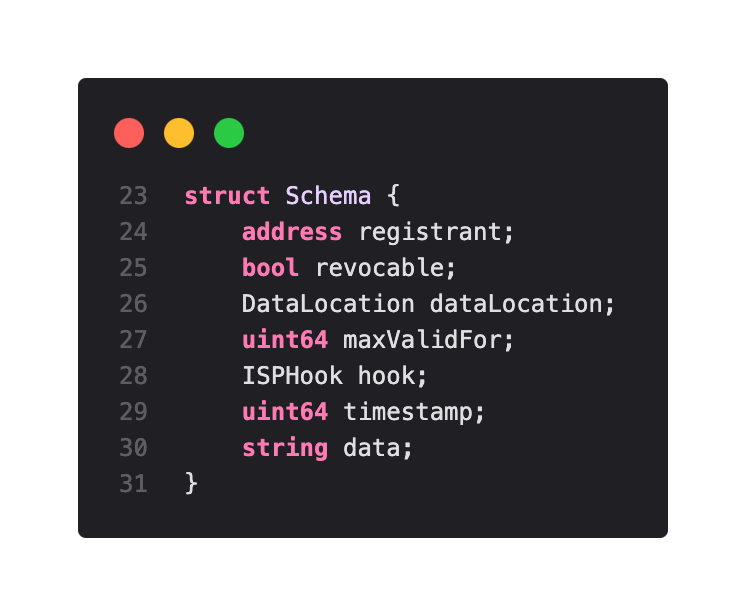
How Sign Protocol schemas are structured in Solidity
Sign Protocol schemas consist of two core modules:
1. **Header**: Contains metadata for initial attestation analysis, including:
* **Attestation ID**: Unique identifier for cross-referencing.
* **Claim Reference**: Points to a related claim or assertion.
* **Attester ID**: Identifies the attestation creator.
* **Signature**: Cryptographic certification of the attestation.
* **Schema Registry ID**: References the schema used.
2. **Body**: Contains detailed attestation data, including:
* **Timestamp**: When the event was observed.
* **Subject ID**: Identifies the attestation subject.
* **Boolean**: Indicates claim truthfulness.
* **Cryptographic Proof**: Ensures data integrity.
* **Evidence Data**: Supports or refutes the claim.
## Building a Schema
Schemas are typically JSON structures, organized as key-value pairs. They can be created using text editors or implemented as blockchain-based scripts. Sign Protocol's Schema Builder streamlines schema creation, offering intuitive flows and reducing complexity.
Schemas are vital for defining attestation nature, ensuring clarity and standardization. A well-crafted schema forms the basis for a robust attestation ecosystem.
For more on schemas, see our blog post: [Schemas: The Blueprint of Attestations](https://medium.com/ethsign/schemas-the-blueprint-of-attestations-c6b0e6faf430).