# Attestations

## Overview

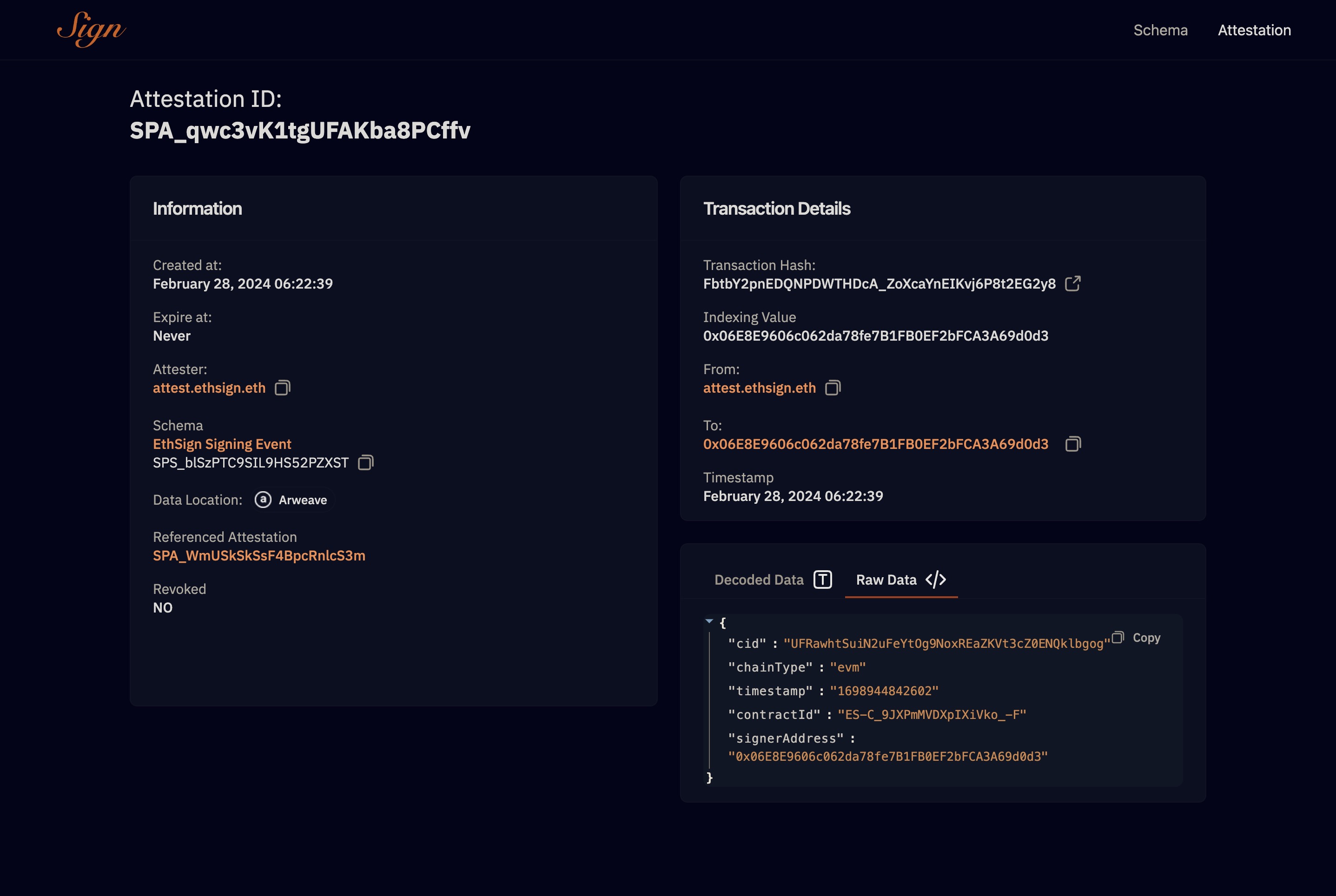
<figure><img src="/files/vZ5Em4Z2QtV777LsuDk6" alt=""><figcaption><p>An EthSign attestation on Sign Protocol</p></figcaption></figure>

An attestation confirms and certifies the validity of a claim or assertion, such as a statement, event, or legal document. It supports verifiers in confidently accepting or rejecting claims. Sign Protocol implements attestations as digitally signed structured data adhering to a registered schema, stored securely on-chain or off-chain.

## Evolution of Attestations

Attestations have evolved significantly, especially with the advent of computers and the internet. Historically, they involved physical seals or signatures. Today, they are structured data with digital signatures, driving Sign Protocol's work.

## Components of an Attestation

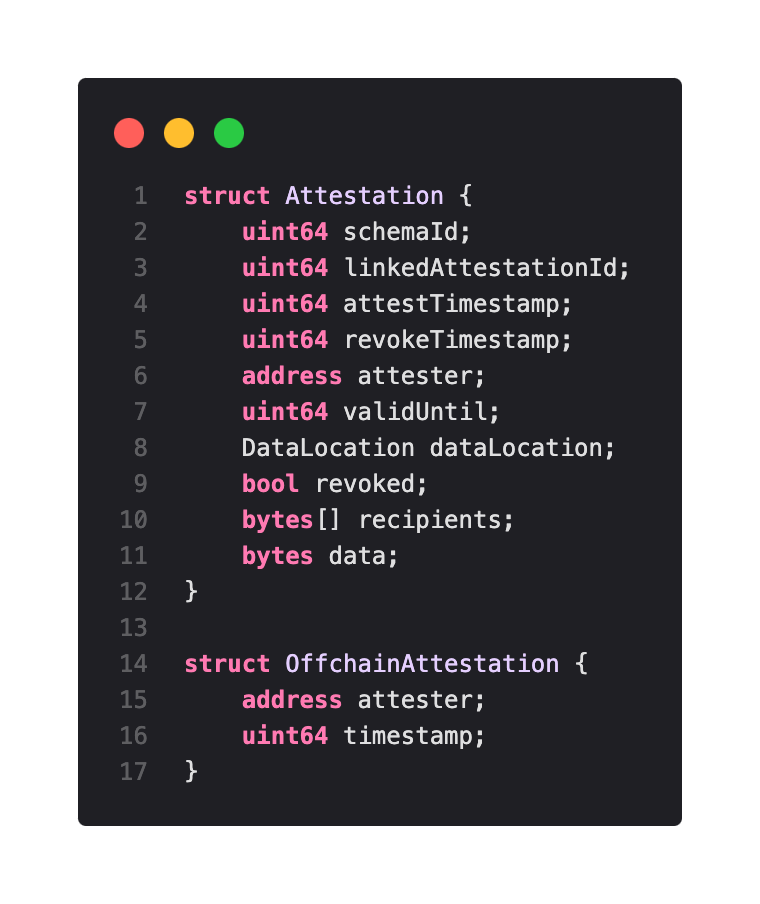
<figure><img src="/files/lmOl215ejDWSnksgHJEf" alt="" width="400"><figcaption><p>How Sign Protocol attestations are structured in Solidity</p></figcaption></figure>

An attestation in Sign Protocol includes:

* **Schema**: Defines the format and organization of data.
* **Context**: Provides additional details for insight.
* **Digital Signature**: Certifies the authenticity of the attester’s identity using asymmetric cryptography.
* **Cryptographic Proofs**: Prove data integrity, often without revealing the data itself (e.g., zero-knowledge proofs).

## Storage of Attestations

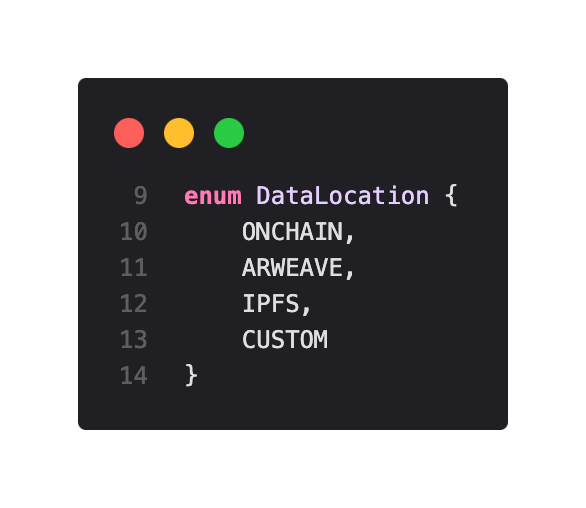
<figure><img src="/files/aBizkxW9FK2Ma5ZwJFYZ" alt="" width="400"><figcaption><p>Data locations available on Sign Protocol</p></figcaption></figure>

Attestations are stored in repositories, with accessibility determined by the hosting platform. Sign Protocol supports:

1. **Blockchain Systems (Onchain)**: Offer censorship-resistance, tamper-resistance, and global access. Examples: Ethereum, Optimism, Solana.
2. **Data Storage and Information Exchange Systems (Offchain)**: Focus on data storage and sharing, with privacy measures. Examples: Google Drive, iCloud, Arweave, IPFS.

## Applications

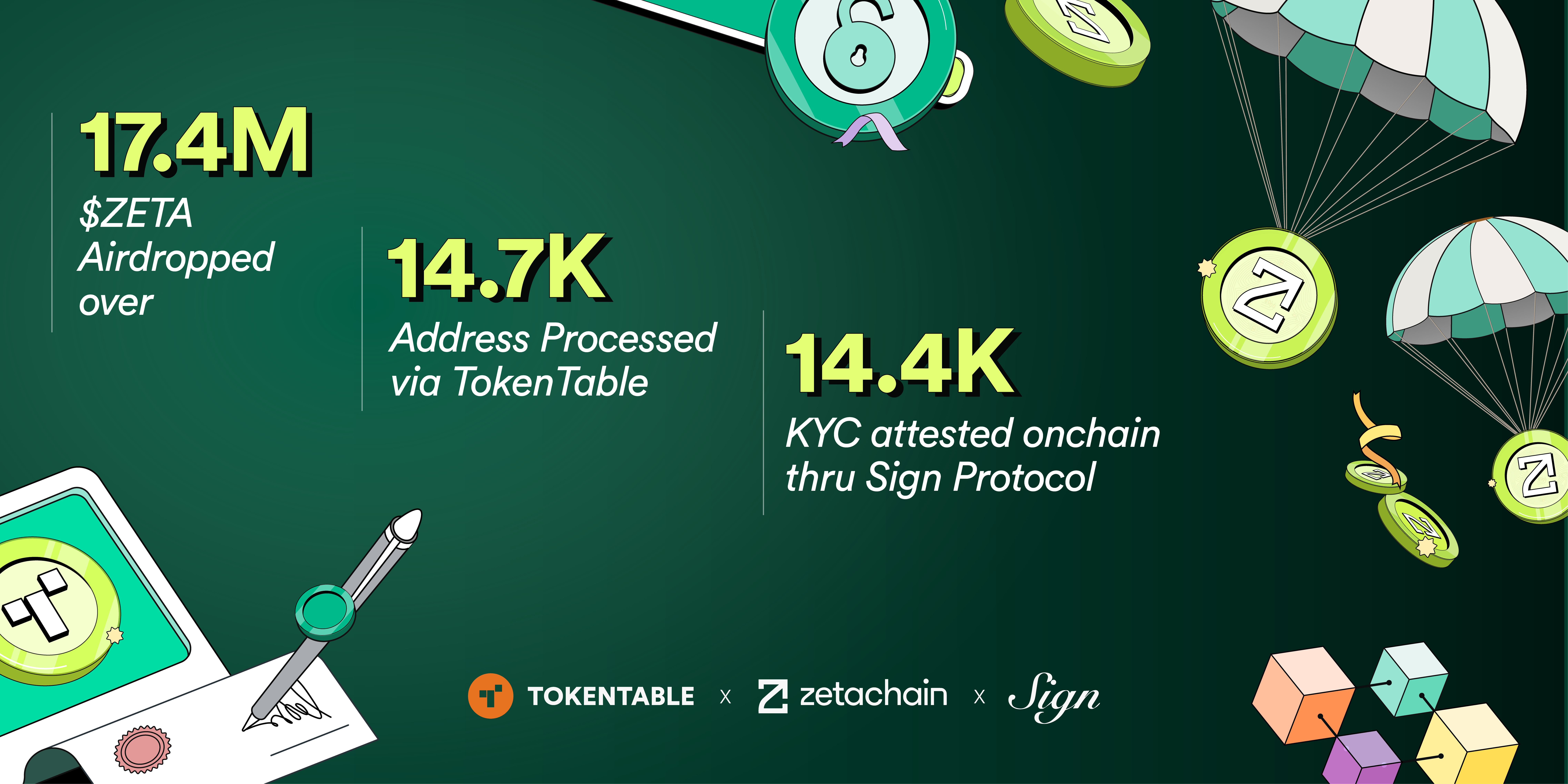
<figure><img src="/files/jgVHlpyYnLevDDXvxBMs" alt=""><figcaption><p>ZetaChain used TokenTable and Sign Protocol to perform a KYC-gated airdrop</p></figcaption></figure>

Attestations are crucial for confirming and certifying claims, with applications in:

* **Credit Scoring Systems**: Assess creditworthiness based on payment attestations.
* **Reward Distribution Systems**: Distribute rewards based on performance attestations.
* **Reputation Systems**: Evaluate entities based on feedback attestations.
* **Judicial Systems**: Resolve disputes using attestations from witnesses.

Attestations reinforce trust systems, making them verifiable and trustworthy. Sign Protocol is designed to be a tool for navigating this landscape.

For more on the value of attestations, see our blog post: [Attestations: A New Era of Trust and Verification](https://medium.com/ethsign/attestations-a-new-era-of-trust-and-verification-b7907e2801ab).


---

# Agent Instructions: Querying This Documentation

If you need additional information that is not directly available in this page, you can query the documentation dynamically by asking a question.

Perform an HTTP GET request on the current page URL with the `ask` query parameter:

```
GET https://docs.sign.global/reference/index/attestations.md?ask=<question>
```

The question should be specific, self-contained, and written in natural language.
The response will contain a direct answer to the question and relevant excerpts and sources from the documentation.

Use this mechanism when the answer is not explicitly present in the current page, you need clarification or additional context, or you want to retrieve related documentation sections.